



The most useful NREMT or EMT practice test for the weeks before your exam is one written from what your EMT course actually covered. Jungle turns your lecture slides, notes and recorded classes into practice questions with explanations, and brings back the ones you miss every day. Below: how the EMT cognitive exam works, from the National Registry's own exam page, and how to practice for each of its five content areas.
The EMT cognitive exam at a glance
The National Registry of Emergency Medical Technicians (NREMT) gives the EMT certification exam in two parts: a computer exam of your knowledge (the cognitive exam) and a hands-on skills exam (the psychomotor exam). These facts come from the National Registry's EMR and EMT examination page:
| EMT cognitive exam | |
|---|---|
| Questions | 70 to 120 items, with 10 pilot (unscored) items |
| Time | 2 hours |
| Format | Computer adaptive, at a Pearson VUE test center or online through OnVUE (remotely proctored) |
| Current version | Updated exam, live since April 7, 2025 |
Computer adaptive means the questions you get depend on how you answer, which is why the exam has a range of 70 to 120 items rather than a fixed number.
Not all multiple choice. The updated exam also uses technology enhanced items: build list (put options in order), drag-and-drop (sort options into categories) and option / check box (classify options in a table). A tutorial at the start of the exam explains each type.
The five content areas
The updated EMT exam replaced the old five domains with five new content areas that follow a patient call:
| Content area | Share of the exam |
|---|---|
| Scene size-up and safety | 15% to 19% |
| Primary assessment | 39% to 43% |
| Secondary assessment | 5% to 9% |
| Patient treatment and transport | 20% to 24% |
| Operations | 10% to 14% |
Questions about pediatric patients are spread through all five areas rather than kept in one. Primary assessment alone is around two fifths of the exam, so it should get the most of your practice time.
Practice by content area, from your own course
Your EMT textbook and lectures are probably organized by body system or by chapter, while the exam is organized by call phase. The easiest fix is to make one practice set per content area from the material that belongs to it.
Sort your course material into the five areas
Go through your lecture slides and notes and tag each chapter or lecture with the area it mostly feeds: scene safety and hazards, primary assessment, secondary assessment, treatment and transport, or operations. A chapter can feed two areas; put it in both sets.
Upload each group to Jungle
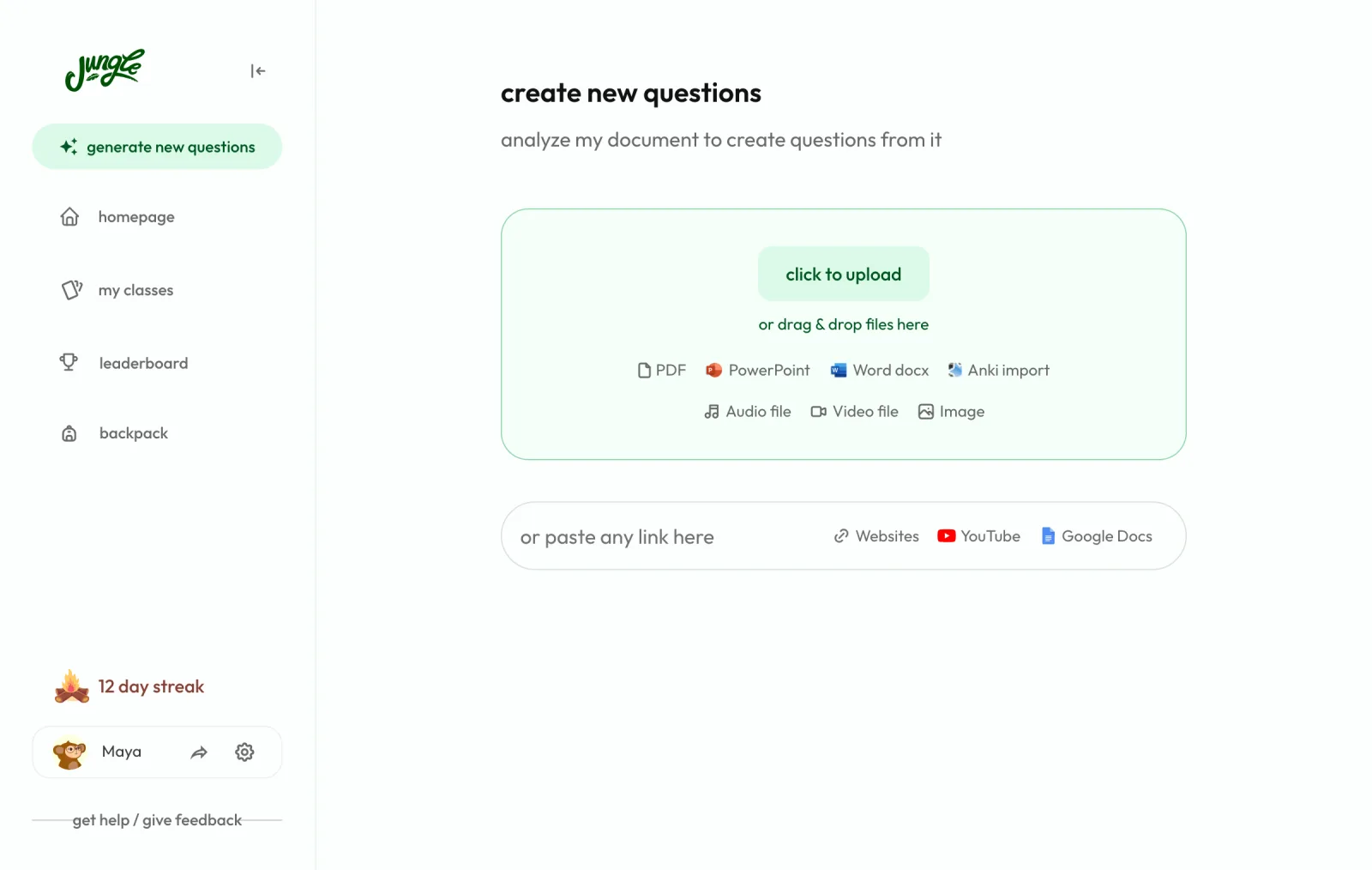
Upload PDF or PowerPoint slides, Word notes, photos of your handwritten notes, or a recorded lecture as an audio or video file. You can also paste a YouTube video, a web page or a Google Doc. Every question Jungle writes comes from what you upload, and notes the page or minute it came from, so you can check it against your course.
Choose question types that match the exam
Make most questions multiple choice. Add case questions (part of advanced difficulty) when you want to apply what you learned to a short scenario, and true / false for quick recall checks. Jungle doesn't make build-list or drag-and-drop items, so try the National Registry's own sample items (below) to get used to those.
Answer, then ask why
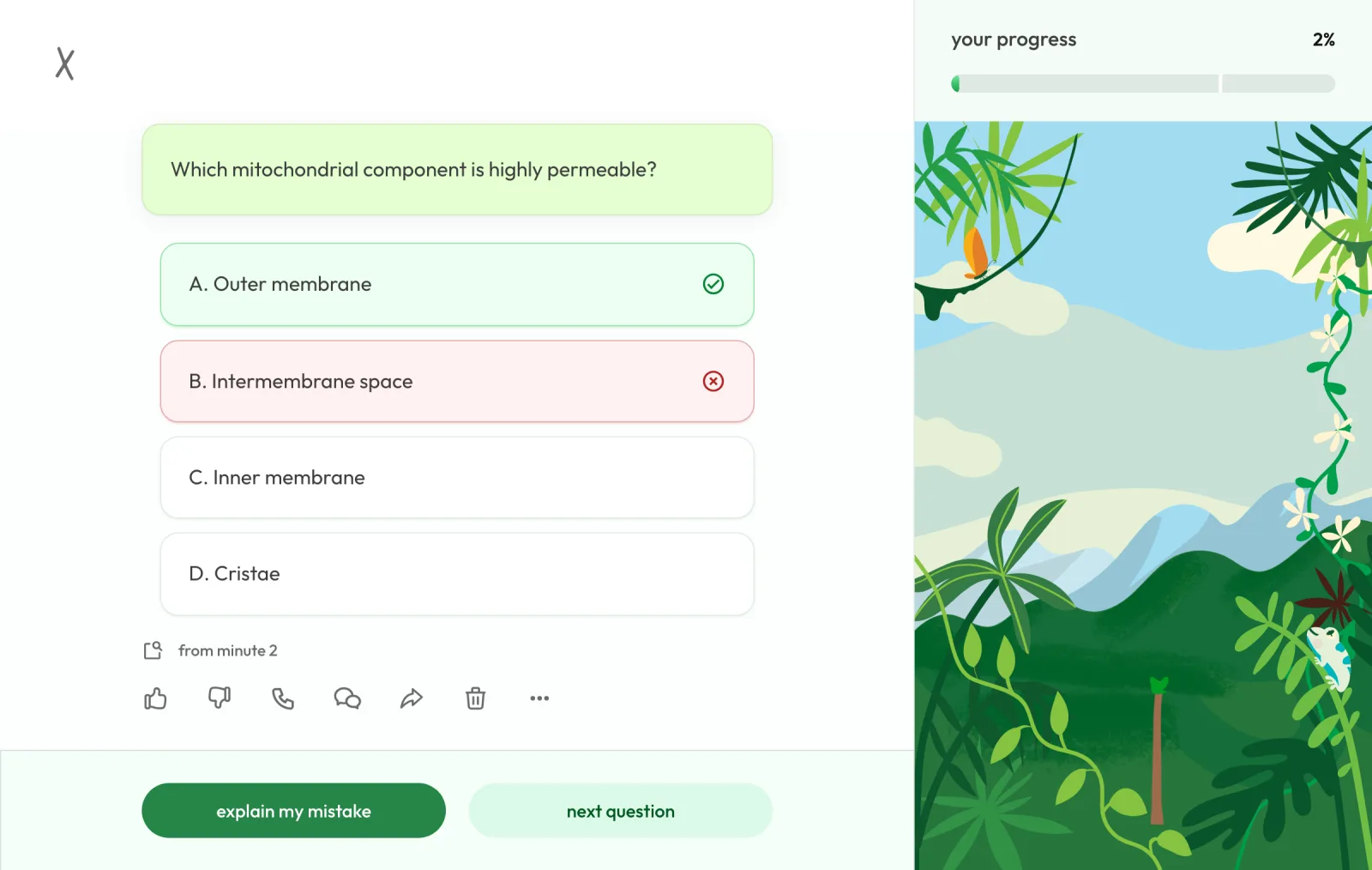
After each answer, ask Jungle to explain it or to explain your mistake. Understanding why an answer is right, not just remembering it, is what carries over to questions you haven't seen. The free plan includes a limited number of explanations each hour; paid plans have no limit.
Let the misses come back every day
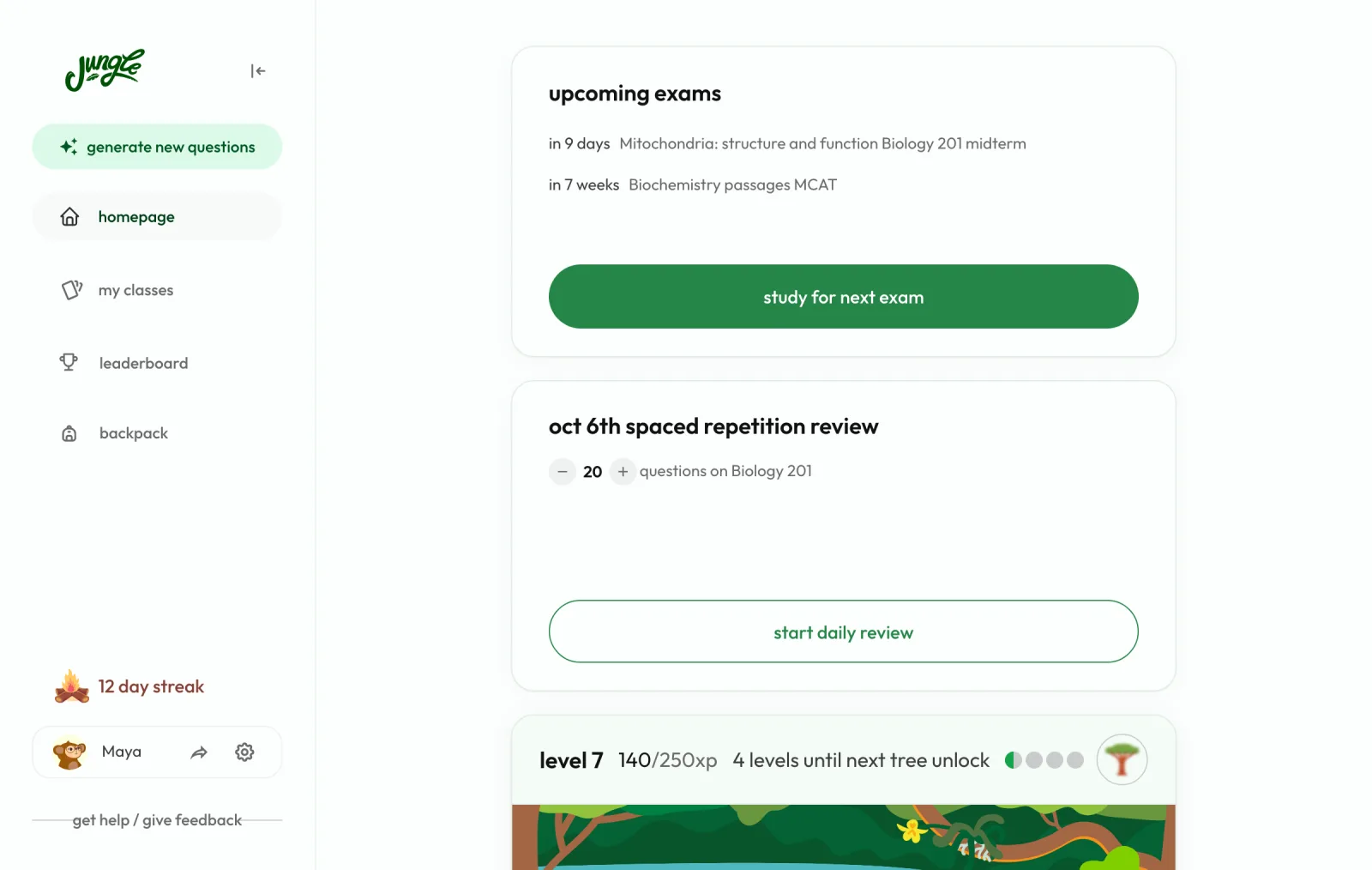
Questions you get wrong come back in your daily review (spaced repetition), so the operations lecture from the first weeks of your course is still fresh on exam day. For one long mixed mock exam across every area, the practice exam generator builds it from all your uploads.
Official NREMT practice material
The National Registry publishes an EMT sample packet, interactive EMT sample items and the EMT certification examination test plan on its examination page. Use them to see the official question styles, including the technology enhanced items; use Jungle for volume practice on the content of your own course.
What about the skills exam?
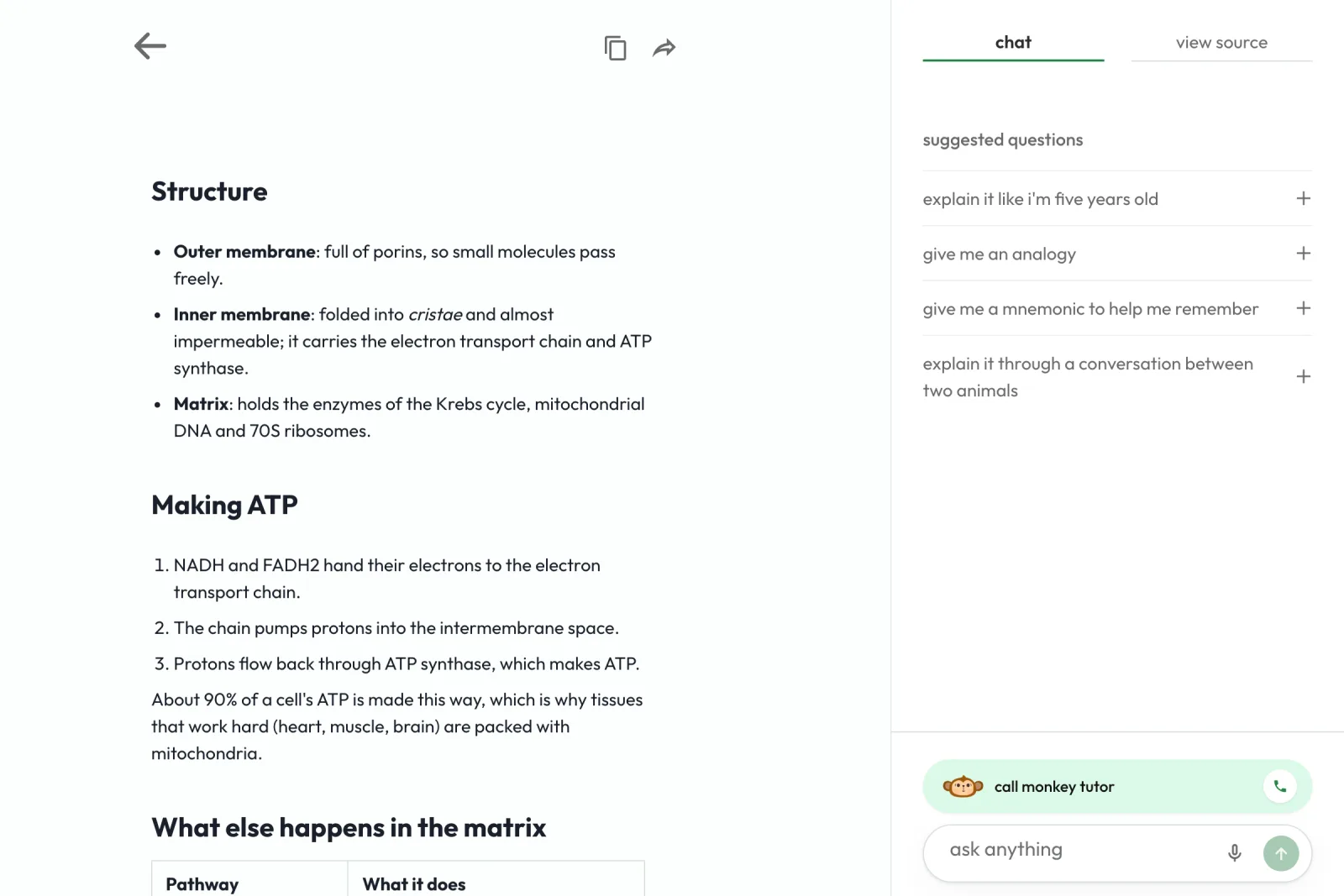
The psychomotor exam is hands-on and follows your state EMS office's approved skills requirements, so you practice it in the lab with your instructor and classmates. Between lab sessions, you can upload your program's skills sheets, turn them into notes with a chat beside them that gives a simpler version or a mnemonic, and quiz yourself on the steps in order.
What Jungle doesn't do
- It has no NREMT question bank. Jungle has no exam questions from the National Registry; every question is written from the material you upload.
- It isn't connected to the National Registry, Pearson VUE, any state EMS office or any EMT program.
- It writes from your material, so check it. Like any AI, it can make mistakes. If a question surprises you, compare it with your textbook and your instructor's notes, and edit or delete it.
Frequently asked questions
How many questions are on the NREMT EMT exam?
Between 70 and 120 items, with 10 pilot items that don't count toward your score, in 2 hours. Because the exam is computer adaptive, the number you see depends on how you answer.
What changed in the NREMT exam in 2025?
The updated EMR and EMT exams went live on April 7, 2025. The old five domains (airway, respiration and ventilation; cardiology and resuscitation; trauma; medical, obstetrics and gynecology; operations) were replaced by five areas that follow a patient call, and technology enhanced items such as build list and drag-and-drop were added. The format, computer adaptive with the same time, stayed the same.
Can I take the NREMT online?
The National Registry offers the EMT cognitive exam at Pearson VUE test centers and online through OnVUE, which is remotely proctored.
Is there a free NREMT practice test on Jungle?
Jungle has no ready-made NREMT test, but its free plan lets you make practice questions from your own course material every month, with no ads, and you keep studying everything you make. Here is what the free plan includes, or see pricing.
Can I study on my phone between shifts?
Yes. Jungle runs in the browser and in the iPhone and Android apps, so a short review fits between calls or on a break.
Does this work for other health exams?
Yes, the same approach works for any exam you study for from course material. See the ATI TEAS practice test and NCLEX practice questions from your own notes.