



A PTCB practice test works best when it drills the drug lists, laws and calculations your own pharmacy technician program taught. Jungle turns your course slides, handouts and notes into practice questions with explanations, then brings back the ones you miss every day until exam day. Below: the PTCE format and its four knowledge domains, from PTCB's own pages, and a study plan built around them.
The PTCE at a glance
The Pharmacy Technician Certification Board (PTCB) gives the Pharmacy Technician Certification Exam (PTCE), the exam behind the CPhT credential. From PTCB's certified pharmacy technician page:
| PTCE | |
|---|---|
| Questions | 90 multiple choice: 80 scored and 10 unscored, placed at random and not marked |
| Time | 1 hour 50 minutes for the exam; plan on 2 hours with the tutorial and the survey after it |
| Format | Computer-based |
| Passing score | A scaled score of 1,400, on a scale from 1,000 to 1,600 |
Who can take it. PTCB lists two pathways: a PTCB-recognized education or training program (or finishing one within 60 days of applying), or equivalent work experience as a pharmacy technician of at least 500 hours.
The four knowledge domains
PTCB's PTCE content outline (effective January 6, 2026) splits the exam into four domains:
| Domain | Share of the exam | What it covers (from the outline) |
|---|---|---|
| Medications | 35% | Generic and brand names and classifications, interactions, strengths and dosage forms, side effects, indications, stability, storage |
| Patient safety and quality assurance | 23.75% | High-alert and look-alike/sound-alike medications, error prevention, issues that need the pharmacist, event reporting, infection prevention |
| Order entry and processing | 22.5% | Formulas, calculations, ratios, proportions, conversions and Sig codes, abbreviations and terminology, equipment and supplies for drug administration, lot numbers, expiration dates and NDC numbers, returns |
| Federal requirements | 18.75% | Controlled substance rules and DEA schedules, restricted drug programs, recalls, product tracking |
The outline marks several areas with an asterisk: some or all of them call for calculations. So the PTCE is not only memory; plan practice that makes you work numbers too.
A PTCB study plan with Jungle
Turn each domain into its own practice set
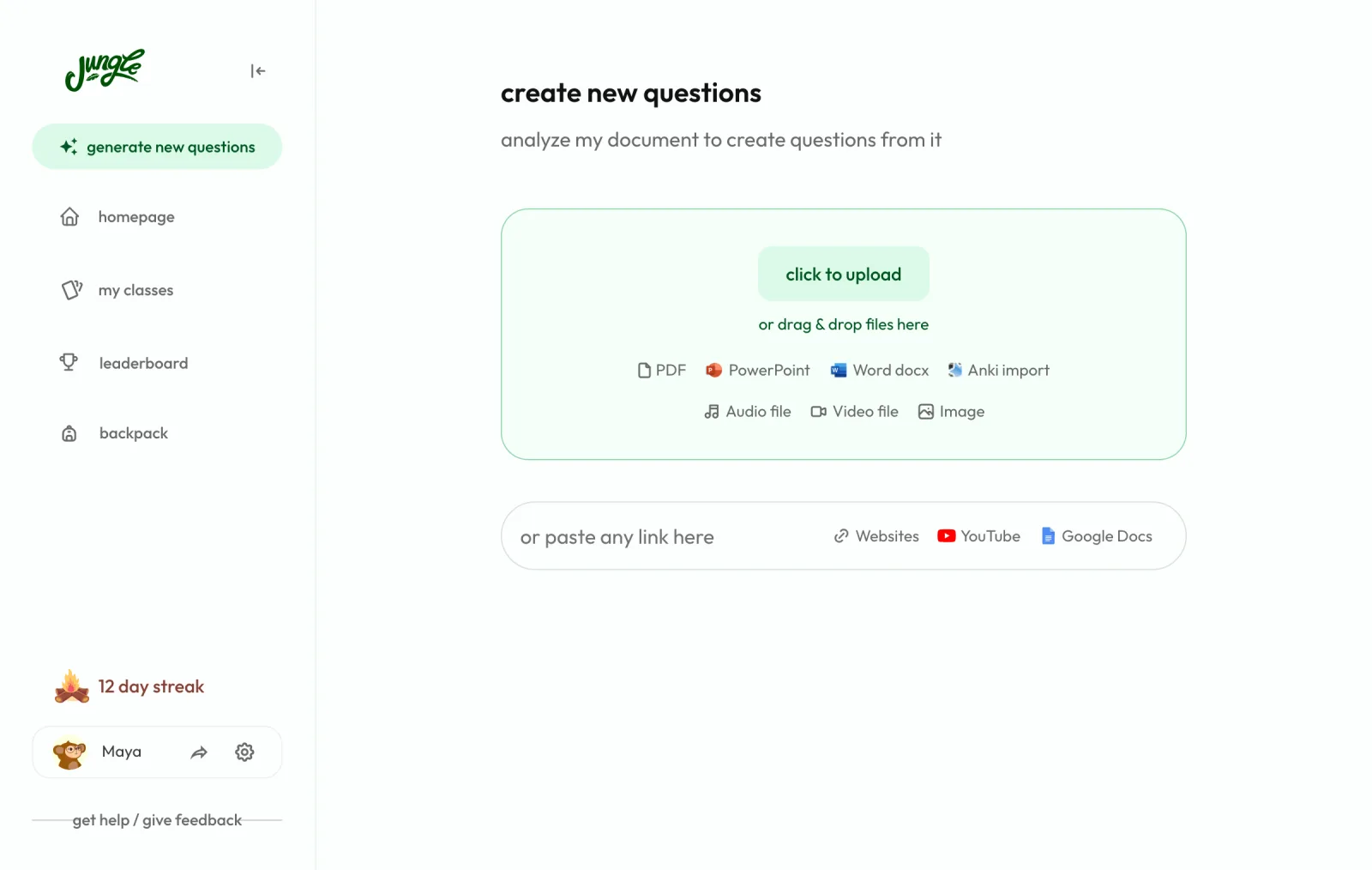
Split your course material along the four domains: your drug list and pharmacology chapters for medications, your pharmacy law handouts for federal requirements, your safety and error-prevention lectures for patient safety, and your prescription-processing and calculation notes for order entry. Upload each group separately (PDF, PowerPoint, Word, photos of handwritten notes, or a recorded class as audio or video; YouTube, web page and Google Doc links work too), so each set lines up with one domain. Every question Jungle writes comes from your material and notes the page or minute it came from.
Weight your time like the exam
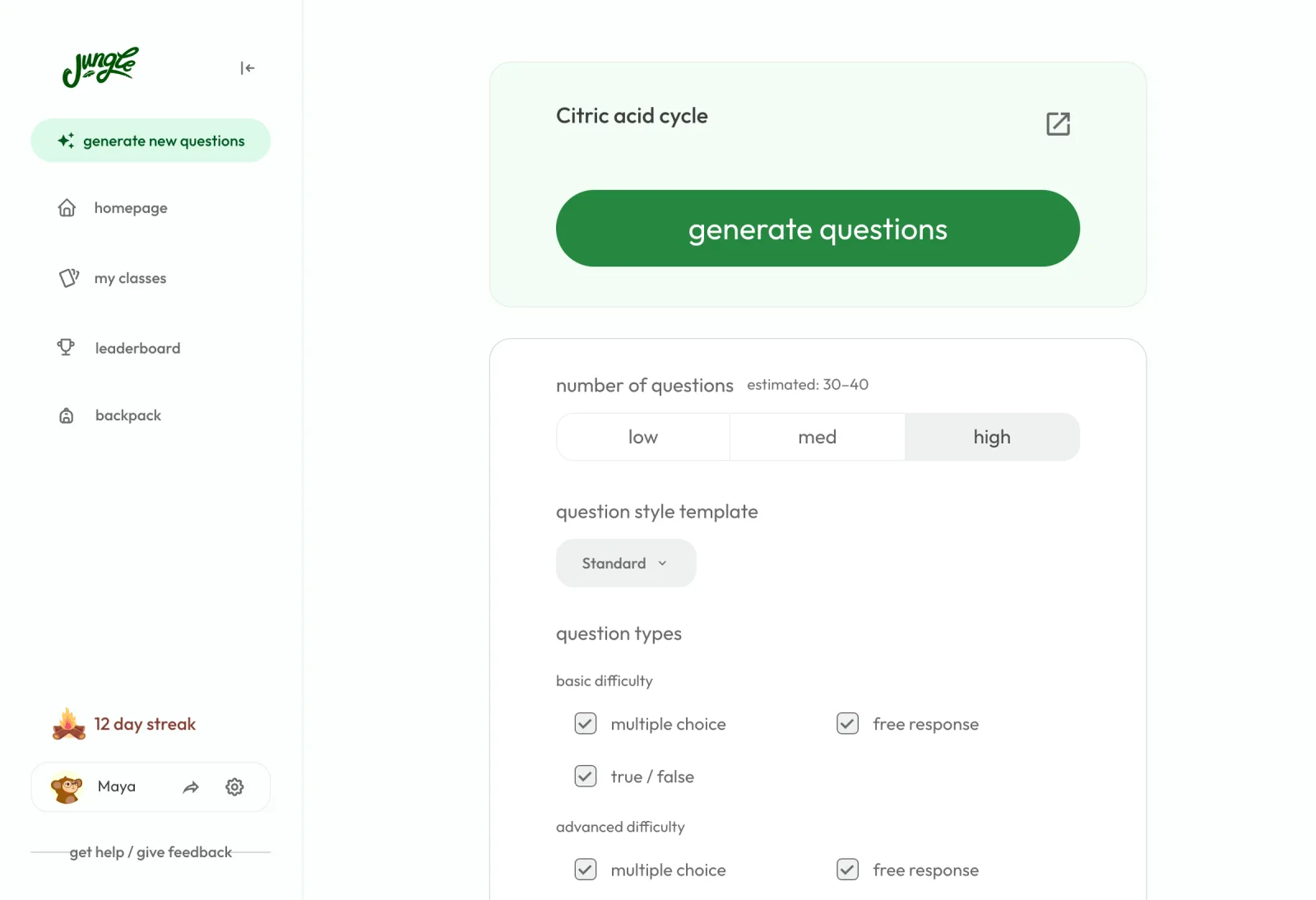
Medications is over a third of the exam, so give its set the most questions and the most review time. You choose how many questions each upload makes (low, medium or high, with an estimate before you start), so you can make the medications set the biggest.
Practice the drug list as flashcards and questions
Brand and generic names reward plain repetition. Make flashcards from your program's drug list for quick drills, and multiple choice questions from the same list so you practice picking the right answer among believable wrong ones, the way the exam asks. If your course gave you a top drugs list as a table, upload it as it is.
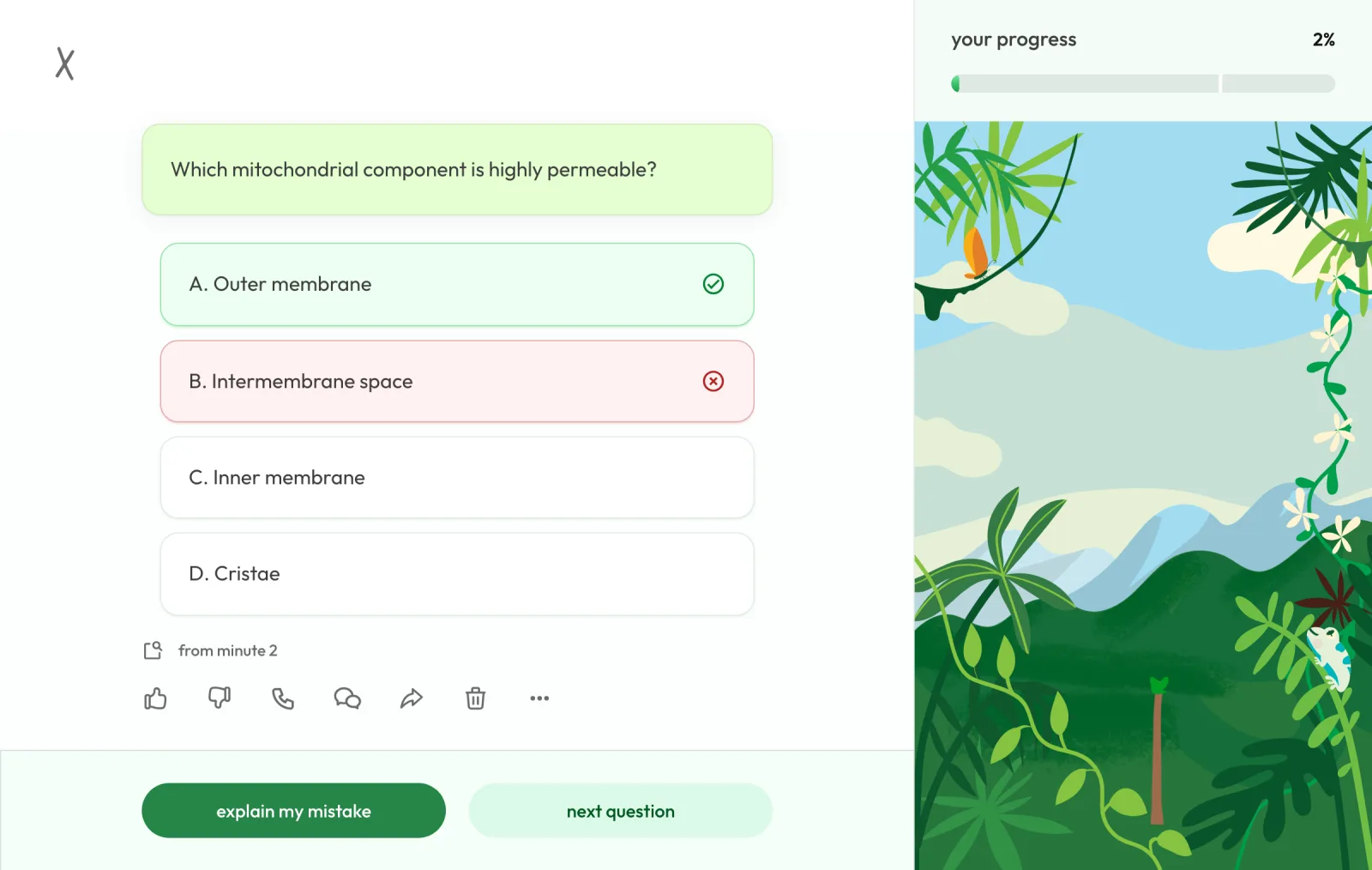
Ask for the steps on calculation questions
When you miss a calculation, ask Jungle to explain your mistake and walk through the steps, then redo a similar question from your notes. The free plan includes a limited number of explanations each hour; paid plans have no limit.
Keep every domain fresh with a daily review
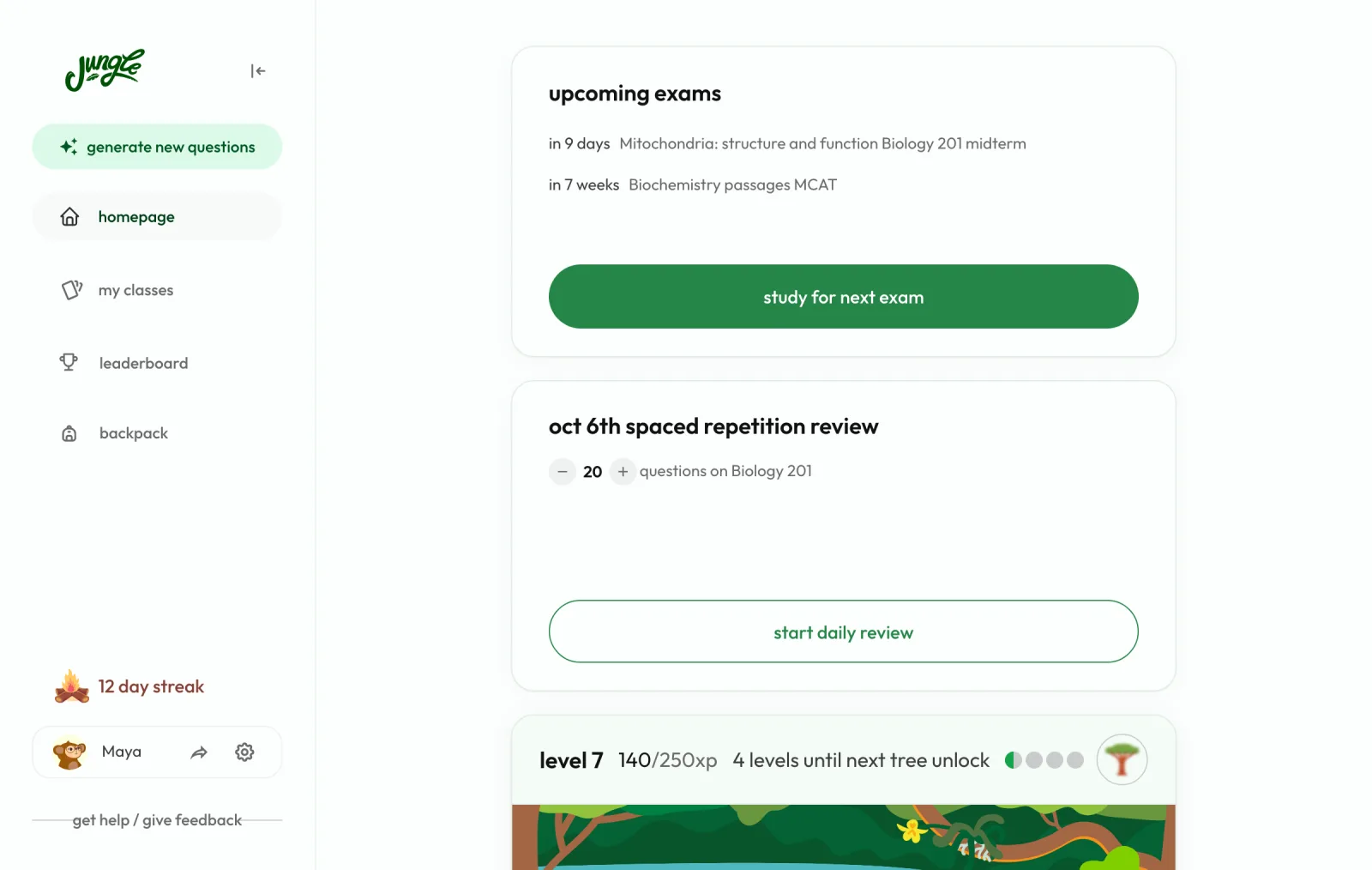
Questions you get wrong come back in your daily review (spaced repetition), so federal law from early in your program doesn't fade while you drill medications. A week or two before the exam, the practice exam generator can build one long mixed test from all four sets.
Official PTCB practice tools
PTCB sells its own practice tools: the PTCE Practice Bank (300+ study questions and a 400-card study deck) and the Pre-PTCE, which it describes as simulating the real PTCE experience with former exam questions. They are the place to see official questions. Jungle is for practice on the content of your own course, as much as you need.
What Jungle doesn't do
- It has no PTCB question bank. Jungle has no PTCE questions; every question is written from the material you upload.
- It isn't connected to PTCB, Pearson VUE, any pharmacy technician program or any employer.
- It writes from your material, so check it. Like any AI, it can make mistakes, and drug facts matter. Compare any question that surprises you with your textbook or your instructor, and edit or delete it.
Frequently asked questions
How many questions are on the PTCB exam?
90 multiple choice questions, of which 80 are scored and 10 are unscored. The unscored questions are placed at random and not marked, so treat every question as if it counts.
How long is the PTCE?
The exam itself is 1 hour and 50 minutes. PTCB says to plan on 2 hours, including a 5-minute tutorial and a 5-minute survey after the exam.
What score do you need to pass the PTCB exam?
PTCB reports a scaled score from 1,000 to 1,600, and the passing scaled score is 1,400.
Is PTCB the same as PTCE?
PTCB is the board that certifies pharmacy technicians; the PTCE is its certification exam. Pass it (and meet the other requirements) and you hold the CPhT credential.
Is there a free PTCB practice test on Jungle?
Jungle has no ready-made PTCB test, but its free plan lets you make practice questions from your own course material every month, with no ads, and you keep studying everything you make. Here is what the free plan includes, or see pricing.
Does Jungle work for other health exams?
Yes. See the NREMT practice test, the ATI TEAS practice test and NCLEX practice questions from your own notes.